

AI Advertising in 2026: The Tools Got Faster. The Ideas Didn't.
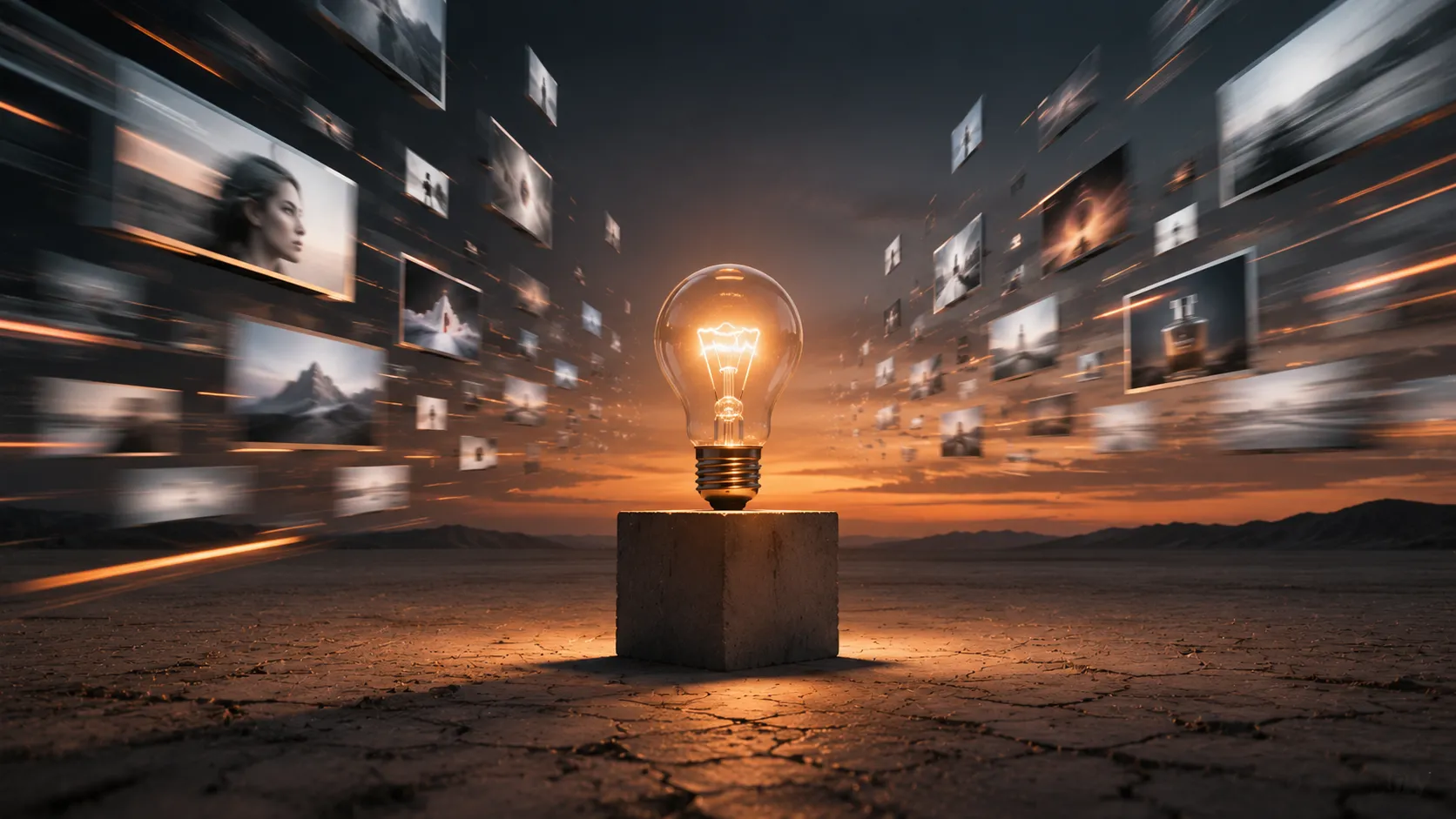
Every agency deck now has an AI slide. Very few of them explain what actually changes — and what stays exactly the same.
Advertising has always moved with its medium. Print gave way to radio, radio to television, television to digital, digital to social. Each shift changed where brands could show up and how they had to talk once they got there. AI is the next shift — but it's a different kind of shift. It doesn't hand brands a new channel. It changes how the work itself gets made.
That difference is why the conversation around AI advertising is so confused. Some people talk as if the ad now writes itself; others treat AI as a novelty filter. Both are wrong. In this article we look at where AI genuinely changes creative campaigns in 2026, where it quietly makes them worse, the risks most decks leave out — and why, after all the new tools, the hardest part of advertising is exactly where it has always been.
/ Table of contents:
- The Shift: From Tool to Collaborator
- Where AI Actually Sits in a Campaign
- Visual Campaigns Without a Shoot
- Video at the Speed of a Draft
- Personalisation Without Losing the Brand
- Faster Isn’t Always Better
- The Risks Nobody Puts in the Deck
- What Still Needs a Human
- A Practical Way to Work With AI
- Final Thoughts
The Shift: From Tool to Collaborator
For a while, AI in a creative studio meant the boring jobs: removing backgrounds, resizing banners, cleaning up audio, tagging assets. Useful, invisible, and nothing a client would ever notice. That's no longer where it lives.
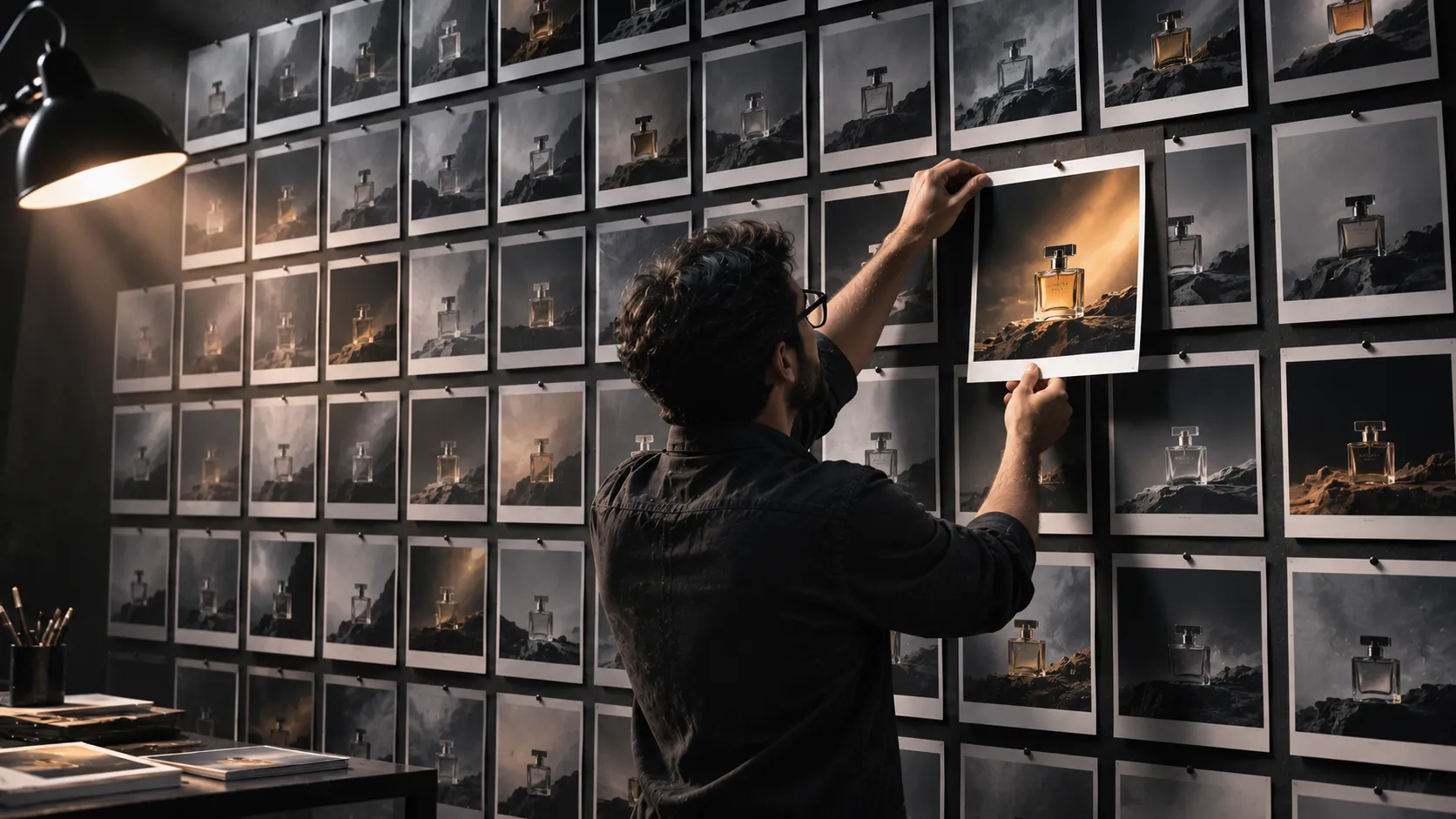
Today AI shows up at the very start of a project — in moodboards, scene explorations, rough storyboards, naming lists and first-pass copy — often before the brief is even finished. A creative team can look at twenty visual territories on day one instead of three in week two. The real change isn't that AI makes finished ads. It's that exploration got cheap, and when exploration is cheap, the way teams make decisions changes with it.
That cuts both ways. More options means a better chance of finding something genuinely new — and a much bigger chance of drowning in mediocre ones. The skill that matters most has moved from making options to choosing between them.
Where AI Actually Sits in a Campaign
“We use AI” can mean almost anything. It's more useful to look at a campaign stage by stage, because AI is excellent at some of them and actively risky at others:
- Research and insight. Summarising audience research, reviews and social conversation into patterns worth investigating. Fast and useful — as long as a human checks the conclusions against reality.
- Concept development. Rough visuals, moodboards, headline variations and “what if” scenarios that help a team see an idea before committing to it.
- Pre-production. Storyboards, animatics and previs that show a client the film before a single day of shooting is booked.
- Production. Generated environments, backgrounds, textures and shots — usually combined with real photography, 3D and traditional craft rather than replacing them.
- Post-production. Retouching, extending, upscaling and cleaning up footage and stills in a fraction of the time it used to take.
- Versioning and distribution. Adapting one master campaign into the dozens of sizes, formats, languages and cuts that modern media plans demand.
Notice what's missing from that list: deciding what the campaign is actually about. We'll come back to that.
Visual Campaigns Without a Shoot
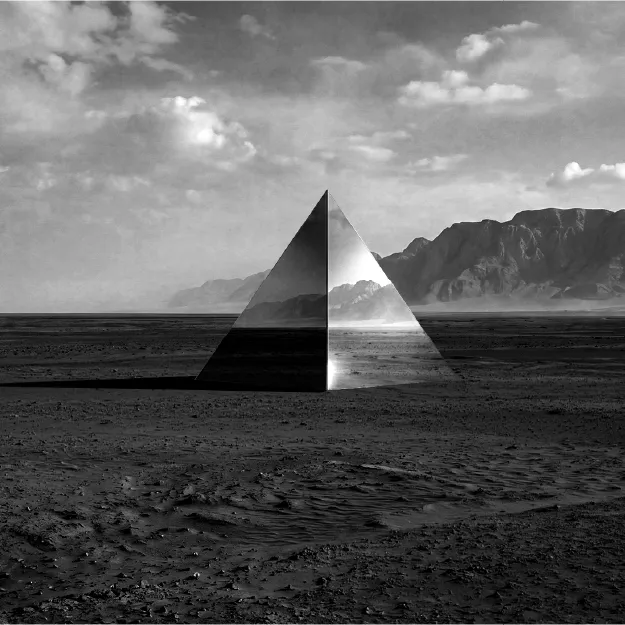
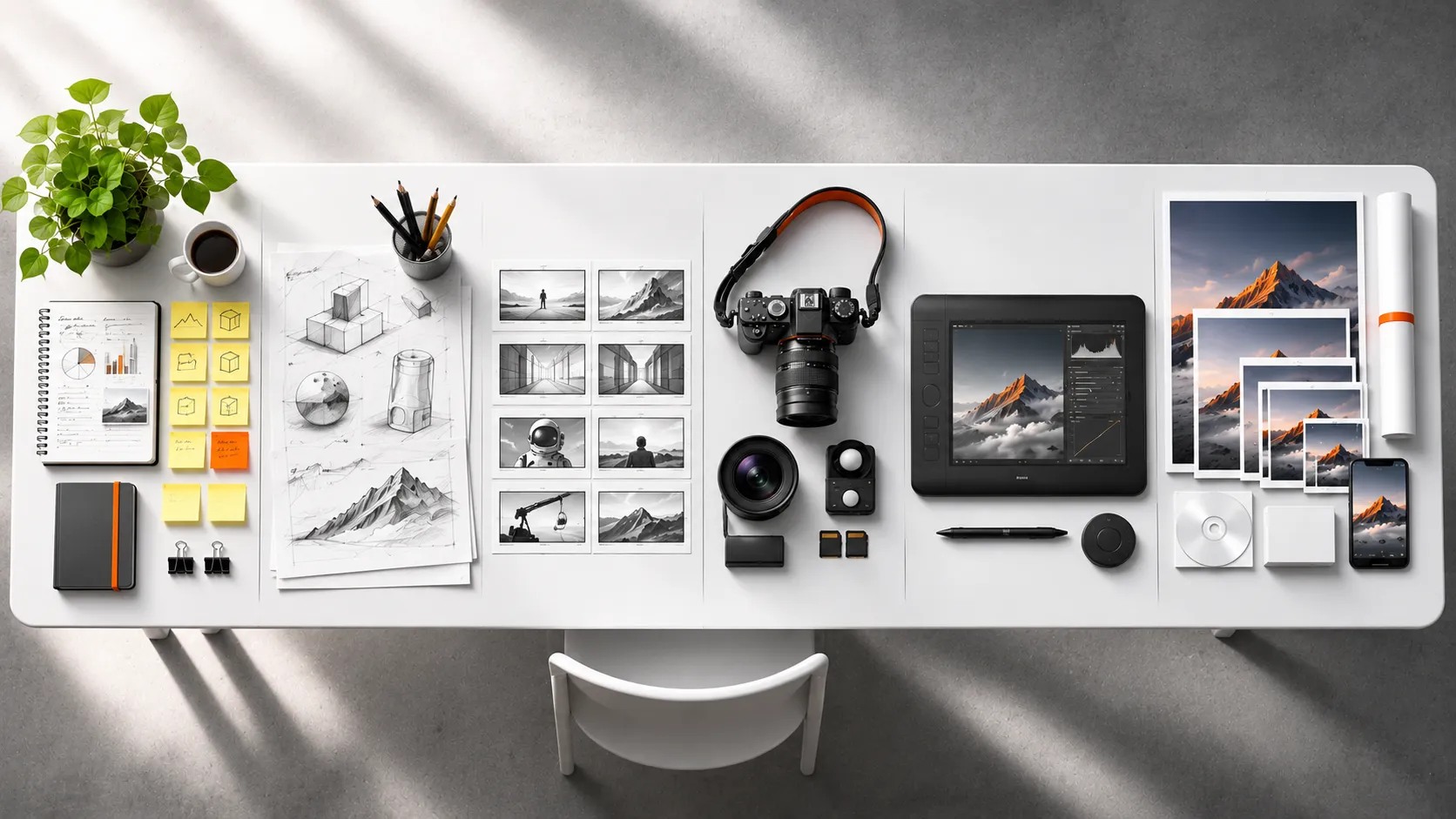
Image generation is the most visible part of AI advertising, and for good reason. Brands can now explore surreal environments, impossible scale and highly detailed compositions without a location, a set, a crew or a weather forecast. Tools like Midjourney and Adobe Firefly have made it possible to put a product on a cliff edge, inside a cloud or in a city that doesn't exist — in an afternoon.
It doesn't replace photography so much as it replaces the conversation that starts with “we can't afford to try that.” Ideas that used to die in the budget meeting now get to be seen, judged and developed.
The catch is accuracy. Generated images still drift on exactly the details advertising cares about most: product shape, packaging, logos, on-pack text, hands and materials. And they struggle to stay consistent across a set — the same product, the same character, the same light, frame after frame.
That's why the strongest results we see are hybrid. The product is photographed or modelled in 3D so it's exactly right; AI builds the world around it; compositing and retouching bring the two together. AI handles the parts where imagination matters more than precision. Craft handles the parts where precision is the whole point.
Video at the Speed of a Draft
AI video has moved faster than almost anyone expected. Tools such as Runway, Google Veo and OpenAI's Sora can generate cinematic shots, product moments and animated characters from text and reference images. For creative teams, the biggest impact so far isn't the final film — it's everything before it.
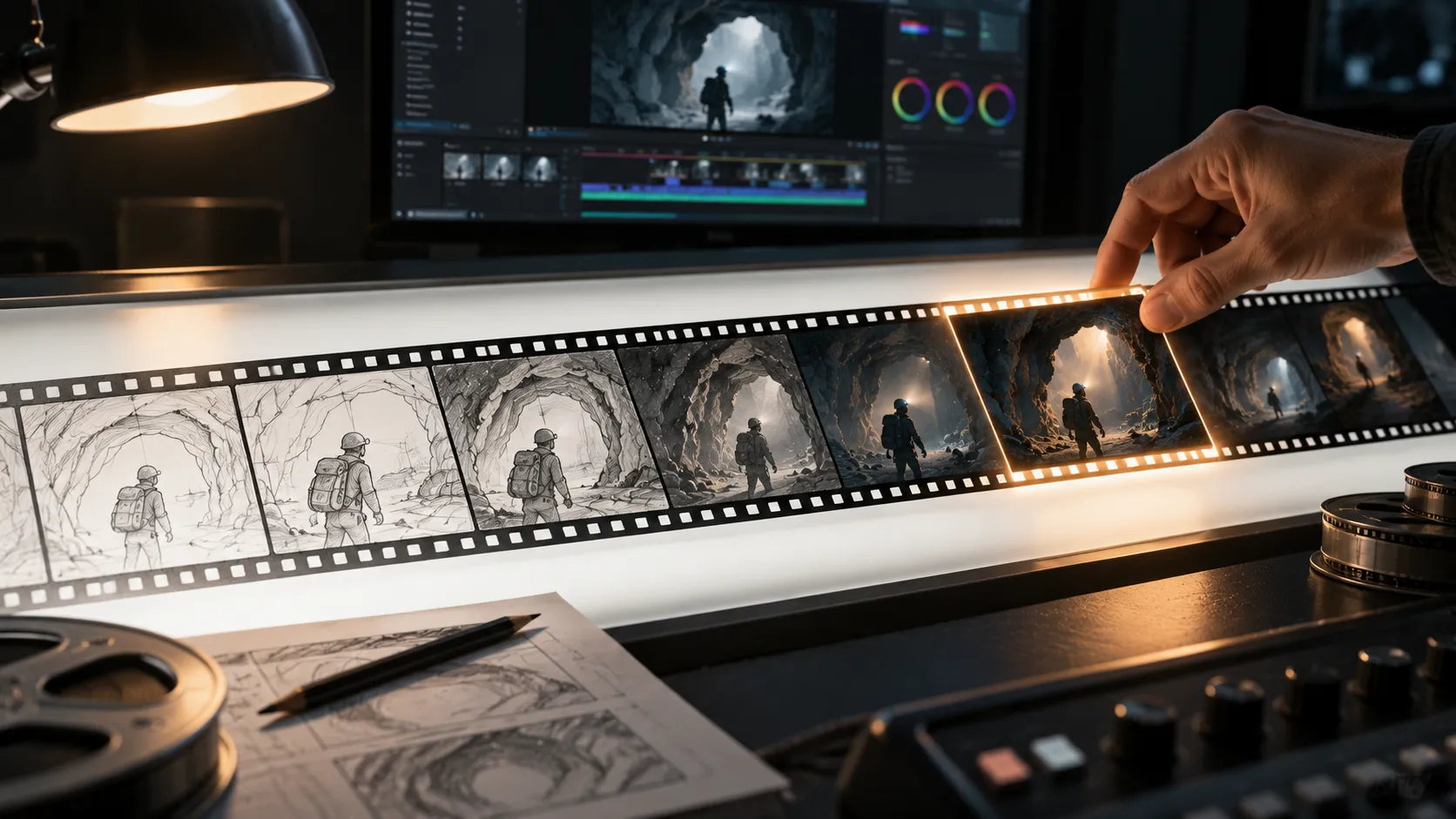
Mood films, animatics and previs that once took days of editing stock footage can now be generated in hours, and they look close enough to the real thing that clients can make confident decisions earlier. Short-form social content, where volume and speed matter, is where fully generated video is most at home today.
But the tools generate shots, not films. Character and product consistency across a sequence, believable physics, precise timing, performance, sound design and the edit are still where a piece of video becomes a story — and that craft hasn't been automated. A string of beautiful generated clips with no rhythm is still a bad commercial.
Personalisation Without Losing the Brand
AI makes it practical to produce creative variations for different audiences, platforms and moments — different visuals, messages and cuts, adapted to what each audience actually cares about. Done well, that's genuine personalisation: the right version of the idea, for the right person, in the right place.
Done badly, it's dilution. Fifty versions of an ad with no strong core idea is just fifty ways of saying nothing. And because each version is generated separately, the brand starts to drift — a slightly different colour here, a different tone of voice there — until the campaign no longer looks like one brand at all.
Variation only works on top of two things: a clear master concept, and a brand system strict enough to hold every version together. In practice that system needs to define:
- The idea that never changes. The one thought every variation must express, whatever the format.
- Visual rules. Colour, type, composition, lighting and image style — written down, not assumed.
- Voice rules. How the brand sounds, and the words it never uses.
- Prompt and reference libraries. Approved references and prompt patterns, so outputs start from the brand, not from the model’s defaults.
- A human approval step. Someone accountable who checks every version before it goes out.
AI made production cheap. It didn't make ideas cheap — it made them the only thing that matters.
Faster Isn’t Always Better
There's a problem with everyone using the same handful of models: the outputs start to look the same. Glossy, over-lit, perfectly symmetrical, slightly too clean — audiences are learning to recognise the “AI look”, and the more of it they see, the faster they scroll past it.
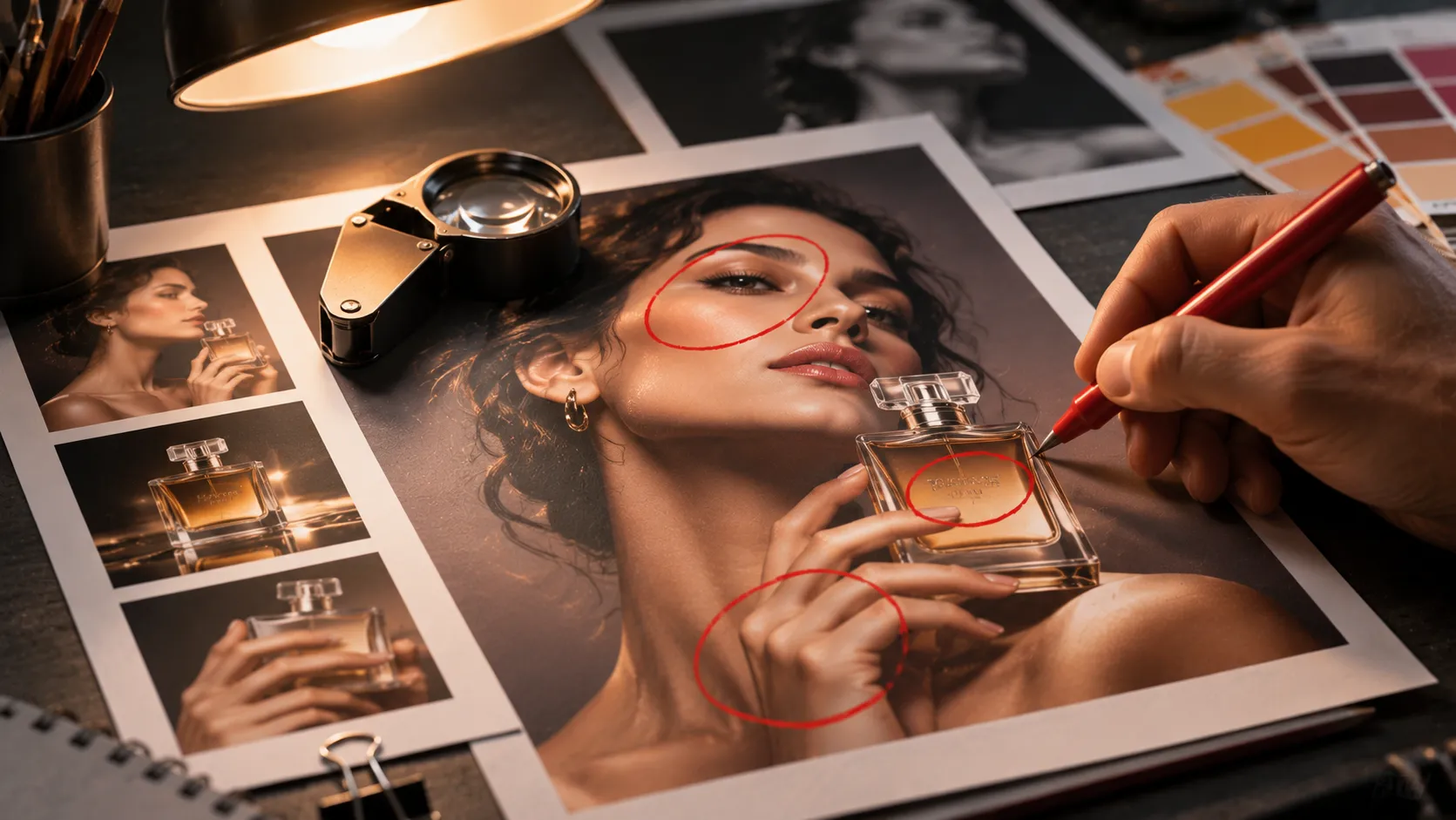
In a feed full of generated imagery, being generated is no longer interesting. Distinctiveness now comes from what goes into the tools: a strong creative direction, specific references, the brand's own photography and assets, and the taste to reject the first fifty results. The teams getting the best work out of AI aren't the ones generating the most. They're the ones discarding the most.
Speed has a second cost, too. When producing an ad takes minutes, it's tempting to skip the thinking that used to happen while it was being made. The time AI saves in production is most valuable when it's reinvested in the idea — not when it's simply removed from the schedule.
The Risks Nobody Puts in the Deck
AI advertising comes with responsibilities that are easy to ignore in a pitch and expensive to ignore in public. Before anything generated goes live, these are the questions we work through:
- Rights and ownership. Copyright protection for AI-generated work differs from country to country, and tools have different terms for commercial use. Check the licence of every tool in the pipeline before you build a campaign on it.
- Likeness. Generated people can unintentionally resemble real ones — including celebrities. Anything that looks like a real person needs the same care as a real person.
- Disclosure. Platforms and regulators increasingly expect synthetic or heavily altered media to be labelled. Being open about how work was made protects trust far more than it costs.
- Accuracy. An AI image can show a product doing something it can't do. In advertising, that isn't a creative choice — it's a misleading claim.
- Bias. Models reflect the data they were trained on. Check who your generated audience looks like, and who is missing.
What Still Needs a Human
The more of the production that gets automated, the clearer it becomes which parts of advertising were never production in the first place:
- The insight. Knowing what an audience genuinely cares about — and what they are tired of hearing.
- The concept. A prompt describes an image. It doesn't decide what the campaign is about, or why anyone should care.
- The taste. Choosing one frame out of two hundred, and knowing why it is the right one, is the actual skill.
- The brand. Keeping every touchpoint consistent and recognisable is judgement, not generation.
- The responsibility. Rights, likeness, disclosure and accuracy — someone has to own them, and it can’t be the software.
None of these are new skills. They're the same skills good advertising has always depended on. AI just removed everything that used to hide them.
A Practical Way to Work With AI
The teams getting the most out of AI treat it like any powerful new material: they use it deliberately, and only where it makes the work better rather than just faster. It is at its strongest in concept exploration, previs and building visual worlds — and sometimes it becomes the medium itself, as when old hand-drawn portraits are reimagined as photographic images and cinematic video.
A simple rule keeps it in its place: AI for possibilities, people for decisions. Let the tools widen what a team can imagine and test. Keep the direction, the selection, the craft and the responsibility for what goes out under a brand's name with people.
Final Thoughts
AI is changing what's possible in advertising: faster exploration, cheaper production, more variations than any team could ever make by hand, and visual ideas that used to be out of reach for all but the biggest budgets. Brands that ignore it will move slower than their competitors.
But the campaigns people remember were never memorable because of how efficiently they were produced. They were memorable because someone understood an audience, had an idea worth producing, and had the taste to make it well. AI doesn't change that — it raises the stakes, because when everyone can make something polished, only the idea is left to stand out.
The tools got faster. The idea is still the job.
What do you think?
Share your thoughts. Your email address will not be published.